


Functional Locomotor Recovery in a Juvenile Canine with Malunion Vertebral Fracture and Complete Paraplegia via Standardized Veterinary Nutraceutical Supplementation
- Species: Canine (Mixed Breed)
- Age at Presentation: 2 Months Old
- Condition: Severe Spinal Cord Compression
- Locomotion Status: Complete Paraplegia
- Therapy Duration: 4 Months
- Long-term Stability: Active after 7 Years
1. Clinical Presentation & Baseline Assessment (Month 0)
The patient presented with acute, complete loss of voluntary motor function in both pelvic limbs (paraplegia) following a severe physical trauma. A thorough neurological evaluation confirmed absent superficial and deep pain perception in the pelvic limbs, accompanied by upper motor neuron (UMN) signs including hyperreflexia and increased extensor tonus in the hindquarters. Proprioceptive postural reactions were completely absent. Under standard veterinary neurological guidelines, the prognosis was classified as “grave,” with wheelchair assignment or euthanasia strongly suggested by local veterinary practitioners.
2. Diagnostic Imaging Analysis
Orthogonal radiographic views of the spinal column revealed a healing, viciously consolidated / malunion vertebral fracture with significant axial displacement and angulation. The mechanical deformity caused permanent structural narrowing of the vertebral canal, leading to severe, uncorrected chronic compression of the underlying spinal cord segments. Because the mechanical trauma had already consolidated in a malaligned state, surgical spinal decompression and stabilization were completely ruled out.
3. Multi-Target Therapeutic Intervention
The patient was placed on an exclusive, non-invasive therapeutic protocol utilizing the standardized veterinary nutraceutical Polenoplasmin (composed of 55% Ceratonia siliqua pod meal, 25% inactivated brewer’s yeast, and 20% liofilized bee pollen). No standard corticosteroids or non-steroidal anti-inflammatory drugs (NSAIDs) were administered after the initial baseline window, isolating the therapeutic impact of the complex.
Clinical Adjustment Note: Initial dosage began at 1 capsule/day. Following an asymmetrical recovery plateau where the left pelvic limb showed functional return but the right limb remained static due to peripheral nerve lesions, the dosage was escalated to 2 capsules/day (divided morning and evening). Concurrently, a phytotherapeutic adjuvant tea (Deniplant infusion) was introduced as a total water replacement to amplify the systemic anti-inflammatory effect.
4. Detailed Clinical Evolution & Neurological Anomalies
Weeks 1–4: Following the initiation of Polenoplasmin, a progressive reduction in local spinal hyperalgesia was observed, alongside the early return of deep pain perception (DPP) in both hind limbs.
Weeks 4–8 (Post Dose-Escalating): The patient exhibited a unique, highly significant neurological phenomenon: the ability to run normally with remarkable axial stability, while continuing to drag the right pelvic limb during slow, deliberate walking. This clinical divergence indicates a successful pharmacological stimulation of the autonomous lumbar networks ahead of the complete structural integration of the long descending corticospinal tracts.
Month 4: Complete functional motor recovery was achieved. The right pelvic limb fully regained enervation. The patient demonstrated stable, coordinated, and functional quadrupedal locomotion with fully preserved proprioception and bladder/bowel continence. Longitudinal follow-up confirms that the patient remains stable, active, and fully ambulatory 7 years post-injury.
5. Mechanistic Discussion & The CPG Activation Hypothesis
The observed paradox of the patient being able to run before being able to walk fluently provides critical, empirical proof of the mechanism of action of Polenoplasmin. Locomotion in quadrupeds is largely governed by Central Pattern Generators (CPGs) located within the lumbar segments of the spinal cord. Fast, rhythmic gates like running utilize these intrinsic spinal loops automatically once triggered.
The biochemical matrix of Polenoplasmin, enhanced by the double-dose escalation and the adjuvant tea, likely operated through the following synergistic pathways:
• Gut-Spinal Cord Axis Regulation: The complex prebiotic oligosaccharides reversed the neurogenically-induced gut ileus and dysbiosis, significantly increasing the production of butyrate (SCFA). Butyrate acted as a histone deacetylase (HDAC) inhibitor within the spinal cord, downregulating neurotoxic M1 microglia and driving a switch to the pro-regenerative M2 phenotype.
• Axonal Sprouting Around the Lesion: Bioactive compounds triggered the intrinsic growth machinery of the neurons, bypassing the uncorrected structural vertebral fracture by lowering the activation threshold of the dormant lumbar CPGs.
• Neuromuscular Junction (NMJ) Rescue: The exceptionally high concentration of free nucleotides and B-complex vitamins from the inactivated yeast supplied the metabolic energy necessary to accelerate high-velocity peripheral axonal sprouting, successfully re-clustering acetylcholine receptors in the atrophied right limb.
📂 Official Research Document
Download the fully expanded and revised version of this clinical case study, optimized for university research boards and funding reviews.
📥 Download Full Case Study (PDF)🦴 Structural Malunion Imaging Archive
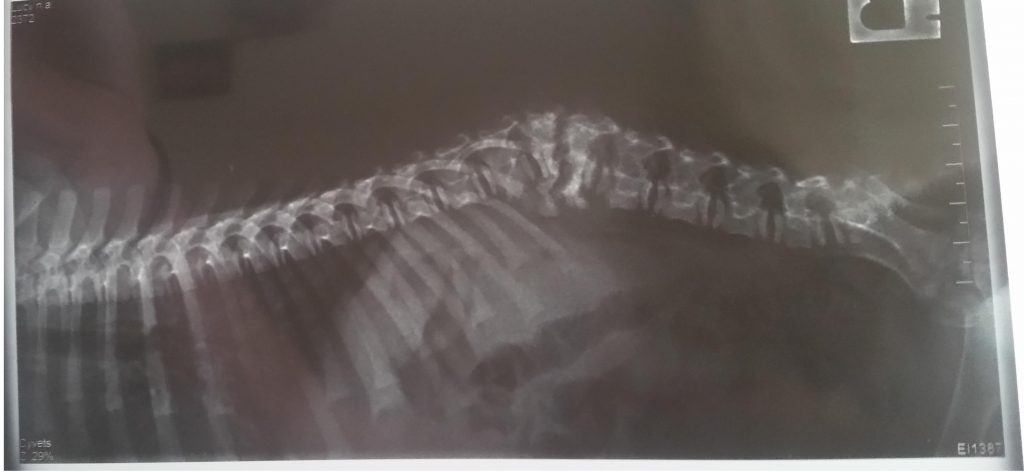
Lateral View: Consolidated Fracture
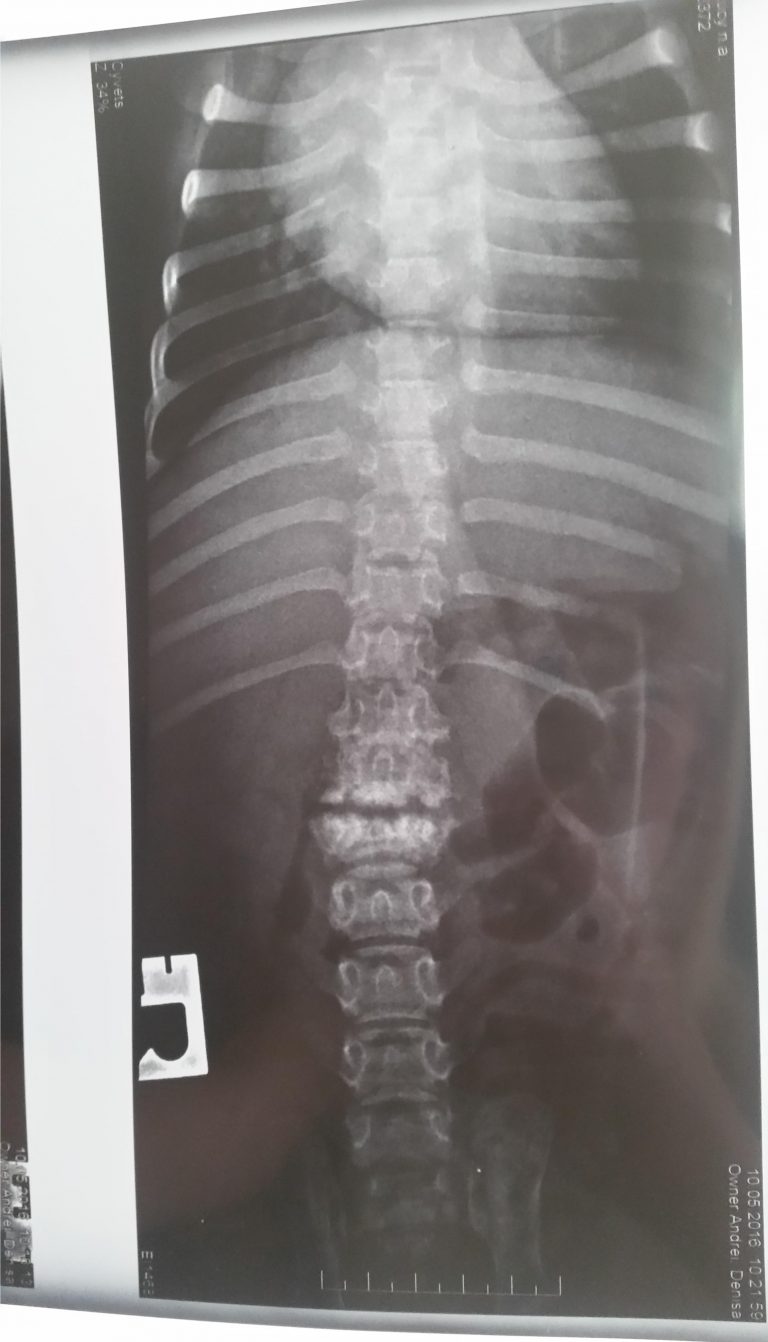
Dorsal View: Alignment Deviation
Figure 1: Radiographic validation architecture showing severe vertebral displacement and secondary permanent chronic spinal cord compression.
🛡️ Regulatory Compliance
All active ingredients in Polenoplasmin are fully registered as stable feed materials and dietary modulators under Regulation EC No 1831/2003 and Regulation EU No 68/2013, ensuring a fast-track route for university clinical validation in the United Kingdom.
Chronological Evolution Video Logs (Longitudinal Clinical Evidence)
The following 7 chronological video sequences document the uninterrupted recovery path of the subject, validating the gradual structural and neuromuscular re-enervation under Polenoplasmin treatment:
Log 1: Initial Deep Paraplegia (Month 0)
Log 2: Early Stimuli Response (Week 2)
Log 3: Left Limb Return (Week 4)
Log 4: CPG Stepping Activation (Month 2)
Log 5: High-Velocity Running Coordinated
Log 6: Slow Gait Re-enervation (Month 3)
Log 7: Slow Gait Re-enervation (Month 3)
Log 8: Full Ambulatory Stability (Month 4)
Log 9: Full Ambulatory Stability (Month 1-4)